3 December 2021

Travel from the UK to Italy: Covid tests, Green Pass, Day 2 PCR and more

 As soon as I write this kind of article, it risks being out of date - but here goes. I travelled from the UK to Italy on Sunday 28th November, hours after the red alert was raised over the Omicron variant, with cases freshly found in the UK and Italy. Travel rules were changing by the minute as I packed, not knowing if I'd be allowed to travel. Even at the airport the next morning, waiting for a flight delayed two hours, I was concerned the delay could allow time for required tests to be upgraded, quarantine to be imposed, or UK visitors to be banned.

With these kind of travel stresses blowing up in a matter of days, or hours, it's understandable that many people can't afford the worry or the risks. Those of us with work to do, jobs out of the home, and important appointments will be thinking twice about travelling at any time in the next few months. After all, new variants are by definition likely to be not covered fully by existing vaccines. And as our existing precautions and multiple vaccinations are apparently no longer enough to drop restrictions, the travel industry is experiencing yet another low, after nearly two years of disaster and bankruptcies.

It will clearly take a certain amount of nerve and flexibility to travel over the next few months, or even years. In the meantime, my advice would be to think how much you really want to go (I was pretty desperate to get back to Venice), check all the latest advice and requirements, try to cover yourself for as many eventualities as possible and be prepared for last-minute changes of plan. I was extremely glad I booked my trip and went ahead with it.
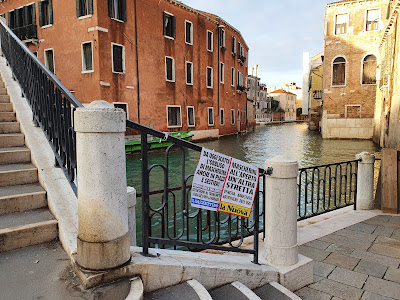
Covid headlines in Venice


Advice for UK travellers going to Italy

This is for travellers who are fully vaccinated and have proof of their status.

In advance

 - Get travel insurance. Travel insurance is critical. Be really careful over what Covid cover is included. I looked at the recommendations of a number of websites, read the small print, and talked to the insurance company over the phone with a list of questions, to be sure I had absolute clarity and a record of what was covered. My needs included cover for costs: if rules changed at either end of my journey to prevent travel; if rule changes (e.g. a potential 5-day quarantine for travellers in Italy) made me choose not to travel; if I had to pay unexpected costs such as hotel quarantine or extending my stay. I found what seemed to be quite comprehensive cover from Churchill, but I won't make a recommendation as I haven't put them to the test yet. Annual cover was surprisingly affordable at £56, though I chose to exclude a specific medical condition, and have a £50 excess.

- Check post-Brexit requirements, if you haven't travelled recently. An EHIC card or latest equivalent, a passport valid for entering the EU, customs rules - don't transport dairy products like cheese sandwiches....

- Check the latest testing and Covid rules for both the UK (departure and arrival) and Italy (arrival and departure)

- Book your pre-travel Covid test.  Book a Covid test valid for flying and for entering Italy. Home tests are cheap and easy. When I travelled, and at the time of writing this, a rapid antigen test carried out yourself was sufficient, but must be arranged through an authorised company who'll issue a certificate. This is one of the requirements that could change any time, so check again right before travel that you don't need a more expensive PCR test.  Order it a few days before - not too early, in case the requirements change. It will be delivered to your home ready to do the test before flying.

You could also book your return-to-the-UK test in advance too - but I regret booking mine quite so early, as rules changed and I'm left trying to get a refund. Allow enough time to have a home test posted to you for your return, though, or to book a slot at a test centre. More below on return testing.

Useful resources:

https://www.gov.uk/foreign-travel-advice/italy/coronavirus

https://www.britishairways.com/en-gb/information/incident/coronavirus/entry-requirements

https://europa.eu/youreurope/citizens/travel/carry/meat-dairy-animal/index_en.htm


Before travel

1. Do your pre-travel fit-to-fly test

Do your test within the 48 hours before your arrival in Italy - not your departure from the UK.  I'd do the test a few hours into this time window, to allow for your flight landing late. I don't know how strict they'd be if your 48 hours had expired due to a flight delay. Also allow time for the testing firm to process your certificate... so the timing took a bit of consideration. I did my test around 6pm on Friday evening, two days before I was due to land in Italy on Sunday at midday.

I used https://www.c19testing.co.uk/ . I paid £22 for the Rapid Antigen Pre-Departure Test, which was quite competitive. The service was very straightforward and efficient, though it rankled that I paid for a test that was the same as free NHS lateral flow tests. This one, though, comes with a code  and the ability to validate it for travel.

I did the test, waited 15 minutes for the results, photographed the results alongside my passport, and submitted the photo to the testing company. The firm warns you to allow several hours, but I got my certificate by email only 30 minutes later, and I was declared Fit to Fly. You'll need to download, photograph or scan the certificate. I found the firm extremely efficient and have heard others praise them too.


2. Download your NHS Covid Pass

You can do this online or via the app.


3. Complete a Passenger Locator Form. 

Again this must be done no more than 48 hours before arriving in Italy.  I did mine around 39 hours before my scheduled arrival time. I was travelling with British Airways, who provided a step-by-step process for submitting the documentation that will permit you to fly. As part of the process they provided a link to the Passenger Locator Form required for travel to Italy.  You can find this yourself here: https://app.euplf.eu/#/. Download your completed form.


4. Submit documentation

Do this after receiving your test certificate. I did this through the British Airways website. The process required me to upload the three documents listed above: my Fit-to-Fly Covid test certificate, my NHS Covid Pass and my Passenger Locator Form. Once this was done, I received a confirmation of submission. Just over an hour later an email onfirmed that my documents had been verified and I was free to check in as soon as check in opened online.


5. Get printing, sort out your Green Pass, and stay organised

I printed off copies of the documentation above as back-up, though the print-outs weren't needed. I also checked my NHS Vaccination Passport and printed out a couple of copies for use in Italy. 

In Italy you need a Green Pass to sit indoors at bars and restaurants, visit museums, use public transport and go to theatres. Until recently these have been available by being fully vaccinated or doing a test. But since 6th of December, a Super Green Pass has been needed in most of these situations many things, available only to the fully-vaccinated or recently-recovered. The NHS app works as a Green Pass, and as it shows vaccination status, should work for every environment where either kind of Green Pass is required.

From the NHS website or app, access the 'Travel' pass. To use this as a Green Pass, show the QR code of your second vaccination for scanning. As time moves on, they may accept the QR code of your booster or third jab, but as mine was too recent to count, I haven't tried that. To avoid the hassle of logging into the app each time, and relying on my phone battery, I used a printout in Italy, which I kept folded in my bag along with my passport. You may have to show additional ID along with the Green Pass. At the Palazzo Ducale in Venice the security staff were very thorough - Green Pass check, passport check, temperature taken.


Venice, seen on arrival from my BA flight


Travel - Covid and Brexit

Having done all the preparation in advance, my travel itself was relatively smooth. My Covid documents were processed electronically and I never had to see them again, show them to anyone or answer questions about them during the journey to Venice. I checked in online, checked my luggage in at the airport desk, wore a mask, boarded my (very delayed) flight just as usual. 

Once onboard, there was another form to fill in for the Italian authorities - one side of A4, basically a health declaration. The crew handed this out and collected it before landing. I'm not sure how the people with cold and cough symptoms on my flight managed to complete this honestly. This was the first point of the journey where any kind of health check or declaration was required; I'd been very surprised by the lack of temperature or visual checks and questions at Heathrow (or is there thermal imaging for passenger temperatures?). One passenger spent his time in the lounge unmasked and coughing and sneezing loudly and continuously. I'd naively thought that any cold-type symptoms would ground passengers.

Once landed at Venice Marco Polo Airport the process was both familiar - I've travelled through here scores of times - and strange. UK passports can be scanned at the non-EU gates. Then you visit an official at a desk to  have your passport stamped. There were no Covid-related questions or checks. I'm a champion at getting through the passport controls first (!), so I don't know if there were queues for the people sitting nearer the back of the plane.

I was asked a couple of questions about whether I lived in Italy or the UK, possibly as I spoke Italian. And leaving the baggage reclaim with my luggage I was stopped at the customs check and again asked what country I lived in, where I'd flown from, why I was visiting Italy, along with questions about how much cash I was carrying in euros and sterling. I hadn't even thought to check the rules on currency, though having looked it up, it seems you can actually bring up to €10,000 in without making a declaration. Did I look as though I might be carrying more, or did he just want to make conversation? I looked noticeably more 'foreign' in colouring and dress than the two women who walked through at the same time, also solo and purposeful, so maybe this is a new reality to get used to. In twenty years of travelling between Italy and the UK I've always been free to walk through before now, before Brexit.

My journey wasn't without stress, as in the hours preceding my departure it looked as though rules could change and my trip could fall apart at any time. I was relieved to be in the air and even more relieved once I left the airport in Venice, free from  threats of last-minute quarantine or our flight being turned away. Though I also spent the next few days with the shadow of concern of a retrospective recall to quarantine if the UK's Omicron cases scared the Italian authorities. 


Café tables by the Rialto bridge


In Italy

In Italy you can still have a great time. Venice is as beautiful as ever. I showed my Covid/Green Pass in a restaurant, a bar, two museums and an airport lounge. This was before the pass became compulsory for local public transport. I wore a mask where required and noted that, like last year, 100% of boat passengers were wearing them. No exemptions, no fuss.

Follow the rules and keep your eyes on the news. For example, during my visit a new rule was introduced in which masks were required outdoors in certain areas of some Italian cities, including several of the areas of Venice which are popular with partying youngsters. Wearing masks outdoors is one of the first things that would be likely to be imposed if infection rates rise significantly, and already has been in some areas of the country.

I'll write more later about how I found Venice. It's empty of some of the categories of tourists who'd normally be here - big tour groups, Chinese parties. Some shops have closed and there's a ghostly feel in the places which would have been full of those tourists, such as the big-name designer shopping streets. But there are lots of independent visitors, a few small European tour groups, many local businesses are still doing a good enough trade, or so they say. Some of the changes might not be for the worse, though a big reset is needed for tourism in Venice in particular, and it remains to be seen how the next year will pan out.

High water in St Mark's Square


Before returning

UPDATE - As you've probably read, it's currently the case that all travellers to the UK  must take a pre-departure test in the 48 hour before their journey. More here: https://www.independent.co.uk/travel/news-and-advice/travel-rules-covid-test-quarantine-b1969929.html. This was introduced the day after my travel, and is in addition to the other requirements listed below.


Before flying back to the UK you'll need to complete another Passenger Locator Form online, and arrange a Covid test to take in the UK by Day 2 after your arrival ('Day 2 PCR test') - you'll need the reference number for your test in order to complete the form and be allowed to travel. 

The UK passenger locator form is fairly simple but has some ambiguous questions - I was left puzzling over what might be counted as an island (Venice is an island along with the Lido and other islands of the Venetian lagoon, but presumably these, lake islands and other non-offshore islands aren't the target of the question). Ridiculously, the NHS Covid Pass is not compatible with the UK's Passenger Locator Form. You're required to upload proof of vaccination consisting of a file (image or PDF) containing only one QR code. This may cause a headache, depending on what technology you have with you and your level of expertise, and means it's probably easier for most to complete the whole form on a phone, so you can use the camera.

As with the outward journey, BA provided a link for submission of my downloaded documents, and confirmed they'd been verified about 90 minutes later.

Before the rules changed, I had booked a home Day 2 antigen test for arrival in the UK in advance from https://www.chronomics.com/, which had one of the cheapest prices. Unfortunately this became useless once Day 2 PCR tests were introduced. They do Day 2 PCR tests but I didn't want the delay of having to post a home test. I've requested a refund, which the firm has theoretically offered to customers, but over which they seem to be dragging their feet. 

The landscape is changing rapidly. As things stand you can do your arrival PCR test any time up to and including Day 2. You have to self-isolate until you get the result. If you do a self-administered home test, you'll have to wait for it to reach the lab by post, which could obviously give you an extra day or two stuck at home in addition to the lab processing time, so really doesn't seem like a good idea unless you're happy to remain indoors for longer. 

The quickest way to get a result seems to be to get a test at an airport testing centre, or one local to you, on arrival. You're allowed out of self-isolation to get a test or post a test.

You'll find more useful information here: https://www.businesstraveller.com/features/how-to-get-a-day-2-pcr-test-at-heathrow-airport/. and here: https://www.moneysavingexpert.com/travel/how-to-find-the-cheapest-private-coronavirus-tests-for-travel/.  Airlines frequently offer discounted tests and voucher codes, for example: https://www.britishairways.com/en-it/information/incident/coronavirus/covid19-tests

Note that there is considerable variety in pricing. Some firms have testing centres which are at the periphery of Heathrow and seemingly hard of access. Some have fast drop-off points for home tests that might be convenient for some travellers but not for most. Others have a significant number of bad reviews online. Many don't even offer a turnaround time. Check your arrival airport as a first step.

Day 2 PCR test at Heathrow

Since 3-hour rapid tests were apparently not approved by the government, I booked one of the rapidly-booked-up slots with Expresstest by Cignpost at Heathrow Terminal 5. ExpressTest promise results by 10pm the next day (with a slight get-out clause 'except in some cases'). They also have other test centres. I had to accept the first available slot, which was four hours after my arrival time, but it was suggested by a helpful employee on the phone that as long as you arrive on the correct day, you should be OK if you miss your slot. They're one of the most expensive options at £69 minus a tiny BA discount, but with a test centre in the terminal building, a promised turn-around time and decent reviews, they seem like a good option. 

On arrival through a quiet Heathrow I headed straight to the test centre in Terminal 5 - head to the left once you reach the arrivals hall. There were friendly and helpful young staff, and I was given an unofficial nod to enter the queue despite being ahead of time. The wait was a reasonable one, maybe around 15-20 minutes. I showed the QR code they'd emailed me with my booking confirmation, was escorted into the testing area by a friendly staff member who admired my hat, did the test quickly and without discomfort, and was on my way into London on the Piccadilly line around an hour after landing.

I dutifully self-isolated at home that evening and the following morning. I was prepared to spend the day at home until receiving my test result, but I didn't have to wait until the 10pm time they'd given. An email arrived at lunchtime with a link to my test results. I had tested negative and was free to return to normal life less than 24 hours after touching down at Heathrow. I was extremely pleased with the service from ExpressTest and would recommend them based on my experience.
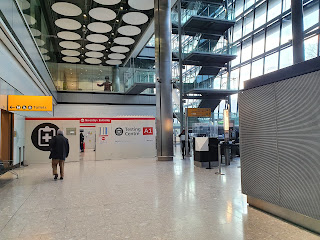


Note: Since I booked my test there was news (via the Business Traveller link above) of a faster saliva test that is permitted, with https://www.haloverify.com/. I haven't looked into this in detail, but Id' recommend checking the latest reports.

The sudden rule changes, vast range of profit-making companies offering tests, and variety of options available, makes things very hard for travellers. Those with money will be able to walk free before those on a budget. You'll be imprisoned at home dependent on the efficiency of your testing company, and only free when they confirm a negative result.  There's an obvious need for government regulation and it would be nice to think that soon the system will become more traveller-friendly.


Should I travel to Italy now?

With rates rising, and all the fears over Omicron, right now is an uncertain time for travel, though things may settle quickly. My hope is that this could be the last upheaval for a while, and that it may be the variant which prompts a re-evaluation of responses. I'd booked my travel before this latest scare. However, I was so desperate to get back to Italy after 14 months away, that I'd have taken the chance anyway. If you want to go, don't give up too easily. But get good insurance, only travel if you have some flexibility to cover extra costs, and be prepared for the extra labour and stress involved in monitoring updates, meeting the latest requirements and dealing with paperwork.

My own trip was manageable. My outbound test cost £22, plus time for the paperwork. I had no issues with my Green Pass/NHS Covid Pass. I spent £17 on a return test, which was rendered useless by the rule change, and am hoping for a refund. I spent £67 on a Day 2 PCR test, an additional cost that I wasn't expecting. I had to spend a short time self-isolating at home, with the concern this could have increased if the rules changed or the testing firm was slow.  My travel insurance would cover the cost (they assured me) of additional expenses such as hotel quarantine, and they may cover the money I've spent on the Day 2 PCR test, as an unexpected extra cost, minus the £50 excess.

Italy is still beautiful, peaceful with fewer tour groups, and local businesses are very glad to welcome Italy-loving visitors. After the last couple of years, it can be amazingly refreshing, reinvigorating and life-affirming to travel and explore, or to return to much-loved places. In my case, the benefits of travel hugely outweighed the extra hassle of Covid restrictions.

If you decide to book travel, please consider using the booking links on my website https://www.italyheaven.co.uk/ or the link below. That way you won't pay more, but I will earn a small commission which might help to keep the website online and update it after a couple of years of running it out of my own pocket with no furlough, salary or government support. Thank you!

> Hotels, B&Bs and apartments in Italy from Booking.com (affiliate link)


Follow me on Twitter or Instagram for my photos from Venice.


Christmas tree in the Piazzetta

3 September 2021

Back to Italy? Where to travel now

I wrote a similar article a year ago but the resurgence of the virus ended hopes of travel for most of us. Now Italy is in reach again for many would-be travellers, with quarantine requirements dropped for vaccinated visitors from the UK (negative test also required). Hopefully this time the revival of travel will not be cut short. So where to go?

Blue sky thinking at the Pantheon in Rome
Favourite places

If you have a favourite place in Italy, this could be the right time to return and revisit all the spots you know and love, giving your support to the restaurants, bars and museums that have survived the pandemic so far. I'm desperate to return to the places I lived in and loved: Rome and Venice - and of course Italian cities are great to visit throughout the autumn, winter and spring.  


Rome

Art and history lovers will want to visit Rome in time to visit the exhibition of the Torlonia Marbles, due to close on 9th January 2022. Rome's a great winter destination anyway, with a good chance of fine sunny weather, glorious sights and more museums and churches than anyone could visit in a lifetime.

- Rome accommodation (Booking)

Rome


Venice

I never tire of telling people how much I love Venice in winter. Before  winters filled up with tour groups, mostly from China, the city had a really cosy local feel between November and March (Carnival excluded). Will the tour groups be back this winter? If not, Venice will be a really special place to enjoy. And if they are, they're quite easily avoided once you're away from St Mark's and the Rialto. Freezing mists, hot chocolate, atmospheric lanes and cold, sunny beach walks - allow several days to experience the variety winter has to offer.

 - Venice in winter

- 10 reasons to visit Venice in winter


Venice at Christmas

Italian cities

 Pretty much any Italian city makes a good destination outside the hottest summer weeks. Florence is another place that offers a wonderful visiting experience and is worth seeing before the full weight of tour groups is back. Genoa is one of my favourite non-obvious destinations - a fascinating city with a big range of things to see and do, and easy rail access to the Ligurian coast resorts and walking routes of the Cinque Terre and the Portofino area. Before the pandemic I had a superb short trip to Genoa in October, and was blessed with hot beach temperatures, enjoyed walks, art museums, shopping food, clifftop promenades, gelato and more.

October in Genoa


Naples is another city that's daunting at first acquaintance but really repays the effort of getting to know it: underground tours, art, monasteries, catacombs, chaos and pastries. 

Naples
Matera

Matera is set to feature in the new, delayed James Bond film No Time to Die, and this unique destination, half cave-town with homes cut into the grey cliffs of a ravine, will be on everyone's tourist radar. Already much busier and developed than it was a decade ago, Matera's likely to see even more visitors - so I'd recommend getting a head start and visiting in the near future. Matera fits well into an itinerary with Puglia, and the trulli houses of Alberobello - my suggested itinerary has been one of the most popular on my website.

- Matera and Puglia: a travel itinerary


Matera


Alberobello

Booking for next summer?

If I can manage it I'll be heading back to the islands next year. May to early July, and early September are the best times for Italian islands, to avoid the extreme heat and holiday crowds (and prices). There are lots of  islands to choose from; among my favourites are the Aeolian islands and glorious Capri. For walking, I was impressed with Giglio, Capraia and Ustica.


Aeolian islands

Sicily and the South

Sicily and the south are always fabulous, colourful and sunny places to visit, as well as very affordable. Although it's not usually essential to book a year in advance, if you want a choice of the best hotels and B&Bs, or to get flights at lower cost, it's a good idea to plan ahead - unless you are very flexible, I'd recommend making reservations by February at the latest.

- Sicily

- Suggestions for Sicilian history itineraries

Taormina


A wild card: Asolo

Asolo is one of Italy's small destinations known to the cognoscenti. An ultra-civilised little historic hill town at the edge of the Dolomites, it's peaceful, scenic and very special. There's only a small handful of places to stay and not a great deal to do - it's perfect for a relaxing, classy weekend break or as a charming palate-freshener for a night or two during a tour of the Veneto, or maybe an add-on to a holiday in Venice.

Asolo

Get inspired

- Browse all the Italian destinations I've written about from tiny villages to art cities

- Where to go in Italy - ideas, itineraries and inspiration


On the beach in Venice, pre-pandemic in February 2020

A request for help

It won't be a surprise to anyone that small travel companies and websites are struggling to survive after 18 months with no income (and no government support, for many of us).  If you are booking travel, please consider using my booking links to choose your accommodation - if you book accommodation anywhere in the world through these, you won't pay any extra, and Booking.com will pay Italy Heaven a small commission which will help to keep www.italyheaven.co.uk online. They have a Price Match guarantee. Without this support the website cannot survive. Thank you.

> Book accommodation with Booking.com

> Buy my Venice Kindle guidebook (published in 2013; prices, a few restaurants, and some museum layouts will have changed but the walking tours, descriptions and vast majority of detail will still be accurate. It has excellent reviews!)

> Read the Italy Heaven travel guide - where to go in Italy, detailed destination guides and travel tips


26 November 2020

Aromas of Rome: scent and memory, from perfume shop to stadium

Earlier in this year of lockdowns I opened a new bar of Nesti Dante soap named 'Roma'. With an image of the Colosseum on the wrapping, it was designed to evoke the Eternal City, its scents oleander, zibbibo grapevines and fig. It started me thinking about the scents that say 'Rome' to me, the smells I remember from living in the city and the perfumes that can transport me back to Rome when I'm far away.

One particular aroma came back into my mind a while ago. In a secretive, elegant French perfume shop in London I tried some scents from the Roman perfume brand Profumum Roma. Several of the scents had gorgeous sweet gourmand notes that took me back suddenly and vividly to a particular spot in Rome: the pavement outside a little bakery on one of my favourite corners of Rome, on Via della Scrofa opposite a stumpy tower with stories from the past. I've no idea why that spot stuck in my head or why I was so familiar with it - perhaps it was a meeting place? I can't remember if I've even eaten their pastries.

Back in present-day London I took my perfume samples home from Piccadilly wrapped in a black velvet bag and whenever I took them out I would inhale that heady sweetness of the lightest, sugariest pastries on a Sunday morning, mingling with the richer chocolatey decadence of heavier, cocoa-stuffed biscuity treats. When I looked up the address of Profumum Roma, it seemed very fitting that a shop was just up the road from the bakery. Coincidence, or not?

When I was in Rome in January I paid a visit - to the perfumier, not the bakery. I sampled a small number of their perfumes (always best to stick to five or fewer), sniffing the coffee beans provided to clear my nose in between scents. Then I headed off to a romantic statue-filled tea room near the Spanish steps to drink a hot chocolate and make my choice between the scents, lifting the perfumed card samples to my nose one by one to pick a favourite. Perhaps unsurprisingly, one of the two I subsequently selected had glorious chocolatey notes and now reminds me not just of Rome in general, but of that particular day in Rome, the tea room, the sculptures, the perfume chat, and the hot chocolate I drank with its little accompanying sugary pasticcini. And also of my favourite Roman chocolate shops, one in Trastevere and one in Rione Monti, and the overwhelmingly rich aroma as you step inside.

Another perfume which transported me from London to Rome was Maison Margiela Replica By the Fireplace. In the dispiriting surroundings of the Westfield Centre, this triggered instant vivid memories of the braziers on the street corners of Rome where old men from the countryside (now replaced by younger immigrants) would roast and sell chestnuts, the smell filling the crisp bright air of winter Rome. In my memory, this is one of the most characteristic smells of the city in winter and when I wear the perfume I only need to sniff my wrist to be back on the Appia Nuova or strolling through the shopping streets of the Tridente.

One of the strangest smells to me when I first arrived in Rome was the smell of lightning; not a phenomenon I'd ever noticed back home. The autumn storms in Rome were like nothing I'd experienced in England: great flashes and cracks of lightning directly overhead, rain beating down in torrents, in sheets, and deafening thunder like giants rolling boulders over our heads. This would be accompanied by a sharp smell: metallic, like phosphorous, ozone, the scent of lightning itself filling our office, like living in an ancient myth.

The smell of coffee and cigarettes was of course ubiquitous, though no more characteristic of Rome than other Italian cities. A cloud of cigarette smoke puffed out by bank staff as they worked, when I went into a Parioli branch to exchange my meagre wage slip for cash. The coffee and pastry aroma filling the air outside Rome's favourite cafe, Sant'Eustachio.

I remember the smells of football matches, of the Stadio Olimpico: the pipe smoke in my face from the older man whose season ticket placed him in the row in front of me at every match; more annoying than cigarettes as it lasted so much longer. The unmistakeable odour of lacrimogeni, tear gas. As soon as you got a whiff of it, you knew there was trouble somewhere nearby to avoid. On one occasion, at a match with children and families present, we were teargassed inside the stadium, yellowish-grey clouds seeping in the entrances and over the terrace, as we held scarves pressed over our faces, trying to protect our eyes, the Curva yelling angrily at the police.

On a contrastingly floral note, walls of scented jasmine aren't so common in the heart of Rome but flourish in the residential streets near my cousin's home, and the heady white perfume reminds me of the time she showed her young daughters - and me - how to pick a tiny bloom and drink the nectar from it.

And the scent of roses: in late spring, making a Roman pilgrimage to the Aventine along with half the city, a tour of the Roseto meant bending to test the perfumes of all the beautiful roses cultivated there, across the Circo Massimo from the vast ruins of the Palatine hill.

The smells I remember aren't all beautiful or nostalgic. As well as the cigarettes and the teargas, I remember very strongly the stench of unwashed human. I had never really been acquainted with this odour before; the tube trains of London never smelled half as bad. That ripe, gritty, meaty stink of a man who hasn't washed all week became an unwelcome daily ordeal on my commute on the underground Metro.

There were other unsavoury smells, too: of the big municipal bins where we tipped our rubbish sacks. The grubby street corners where elderly ladies left plastic plates of stinky food for cats. The smell of cigarettes everywhere.  Of joss sticks and cannabis on the streets of Trastevere, where young drop-outs from wealthy countries would sit begging from the poorer Romans. 


But of course there was also the food: pizzas reeking of delicious truffle, or porcini mushrooms, steaming plates of pasta with cacio e pepe, artichoke, fiori di zucca, tomato sauce, the fresh-bread smell of bakeries, the doorway of a cheese shop, a glass of red wine in winter, the bouquet of wine from the Castelli Romani, the fresh mint smell of the Mojito cocktail popular with my cousin's friends, the sharp fresh citrus of a refreshing spremuta di arancia in the summer. I remember one orange juice in particular, on a very hot day, in the garden of Villa Giulia, the Etruscan Museum, that tasted like the most perfect and welcome refreshment in the world.


When I was a child I had no sense of smell that I was aware of. A forward-thinking GP prescribed nasal drops and a temporary dairy-free diet and suddenly I had a whole new sense. There are times when I've thought it might be convenient to be free of olfactory stimuli. But looking back and realising how big a part smell can play in our memories and in our appreciation of the world around us, I'm inclined to accept the unpleasant odours in return for the benefits. At a time like this, when most of us are exiled from our favourite places and experiences, scent can prove to be a comforting or inspiring window to past experiences and other worlds.

What Roman scents have I forgotten? The beer my local friends drank as they drove recklessly through the night (I tried to avoid lifts). Churches filled with incense and guilt. The heavy clouds of overpowering chypre as older Roman women walked past (spray it on your feet, your wrists, your elbows, you hair, in order to waft it through the air as much as possible, women were taught). The throat-tickling scent of vin brulĂ© at the Christmas market in Piazza Navona. 

As well as forgotten aromas, there are others I must have been so used to they hardly registered. And perfumes which I can't bring to mind though I must have inhaled them often. The smell of exhaust fumes and car tyres. Of melting tarmac in the summer heat. Of a crowded pizzeria in winter.

Are there smells I've missed that represent Rome to you, or remind you of times in the city? Or aromas that evoke other places in Italy? I think of the South, or Venice, or Florence, and a whole new set of scents comes to life...

The Nesti Dante soap which started this trip down memory lane was this one: Dolce Vivere Roma. Although pleasant, it didn't compare with my favourite the glorious and more highly scented: Il Frutteto Fig and Almond (Amazon UK affiliate links to support the Italy Heaven website). My chosen scents from Profumum Roma were Battito d'Ali - light, high-pitched, creamy, sugary, orange-flower sweetness 'inspired by the beating of an angel's wings', and Sorriso, a darker scent, its sweetness overlaid with dark chocolate and a little bitter orange. In the UK you can buy the perfumes from Jovoy Paris.


28 September 2020

Thinking of Italy? Where to go now

 At the time I'm writing this most British citizens are free to travel to Italy with no restrictions or travel warnings and many have recently travelled (like me), have booked travel or are considering it (readers in lockdown areas should check local guidance). Travel to Italy is also straightforward for residents of many other countries, although sadly some of my readers will be limited to planning for next year. During the pandemic different countries' rules and liberties have changed and will change again; travel between continents and some types of travel may be difficult or impossible. 

As always I can't take the responsibility of actively advising anyone to travel. There are a number of potential complications and risks to consider, and many people would rather wait until next year. It's very important to check your travel insurance, the rules of both the country you are leaving and your destination, the procedures of airports and airlines in between and to think through implications of rule changes, quarantine impositions, and health risks.

But right now Italy is probably the one of the best places you could travel to from the UK. After a terrible experience in the early stages of the pandemic and a tough lockdown, Italy has currently got much lower infection rates than many other European countries, has managed to keep its figures stable for several weeks now and is being praised as an example of successful infection controls. Of course this could change, but at present there is no automatic quarantine expected of travellers at either end of a UK-Italy journey, Italy is considerably safer than Britain - and if the UK rules are arduous, you could export your extended family for an Italian break where you will be allowed to be together, maybe even plan a family Christmas in the sunshine. There are also some very good travel bargains - my brother has flown to Venice today for £144 per person for three nights in a central hotel, flights included.


In the case of origin countries/areas with a very high infection rate (much higher than the UK), Italy has instituted testing on arrival rather than imposing quarantine - an encouraging move for incoming travellers. Currently passengers flying into Rome report getting fast and efficient Covid-19 tests, with the results in half an hour. Rome Fiumicino Airport has won a 5-star rating for its pandemic protocols. Note that there is testing on departure from Rome too, with positive results meaning a passenger can't travel.

Apart from the universal problem of partying youngsters breaking rules, Italy has seen a generally community-spirited response to legislated precautions. Masks are worn on public transport and indoors, with hardly any exceptions, and should also be worn in crowded outdoor areas after 6pm. When I was in Venice the worst offenders at non-mask-wearing were foreign tourists.

Italy's latest pandemic protection measures are explained helpfully here in English: 

> http://www.salute.gov.it/portale/nuovocoronavirus/dettaglioFaqNuovoCoronavirus.jsp?lingua=english&id=230

If you're not happy to comply with these, or to accept the possibility of quarantine in case of a positive test or symptoms, then don't travel to Italy. Italy is keen to welcome foreign visitors - tourism represented 13% of GDP last year, and Italians are hospitable by nature - and is doing its best to offer a welcoming experience - it would be heart-breaking if this endangers its population.

Some hotels and tourist businesses are still closed but the majority are open. In Venice restaurants were doing very good business when I was there. Most museums and tourist attractions are open, though you should check ahead for opening times, which may be reduced, and make any necessary online bookings. Airports are much quieter than normal.

I travel to Italy in autumn and winter not just to see friends, family and familiar places, but also to enjoy quieter cities, atmospheric scenery, a bigger chance of sunshine and warmth than the UK, and because frankly some destinations are too hot in summer months. Thick rich Italian hot chocolate is another big attraction. Here's a hot chocolate I enjoyed in wintry Turin:


This year, independently of the pandemic, there is another significant reason for UK citizens to visit Italy soon. After the New Year, due to Brexit, there are no guarantees as to the ease of travel or whether British citizens will be eligible for health care (a pretty big consideration given that many travel insurers are now excluding pandemic-related issues from their cover). Maybe everything will be fine, but if you only have a UK passport and want to travel with the rights and entitlements of EU citizens, you only have three months left.


Where to go

It's a changeable situation and unlike any normal autumn and winter. This year, as well as the climate, visitors will be prepared for potentially changing situations with regard to restrictions, tourist numbers and opening times/dates. Where to go will of course be affected by when you are planning to travel - a last dose of summer, or a winter city break?

This week the temperature in Sicily is forecast to reach 29 degrees centigrade, Rome is set for 24 degrees, and the north of Italy 21 or 22 degrees. Over the next few weeks there's still time for some late sunshine and warmth and maybe a few hours on the beach.  (I managed this in northerly-but-mild Liguria last October). While not quite as ideal as spring, autumn can be a good time for a walking holiday - a good chance of sunshine but not too hot for physical activity. Later in the year the north can get cold, though a wrapped-up city break in Venice or Turin with hot-chocolate breaks has its own appeal. 


Airlines have reduced the number of flights between Italy and the UK, but also reduced prices and there are some very good deals available, so budget-conscious travellers can opt to choose their destination based on prices. On British Airway's website there are tools helping customers to find the cheapest return flights.

In choosing a destination it's also worth considering the unique advantages of this particular year. Disaster has struck, but there are bright spots that can give comfort, however sad their underlying causes My experience of Venice last month was transformed by the absence of tour groups and cruise ships (cruising has restarted now, but in a very limited way). There are very few visitors in Italy from outside Europe, whereas in recent years cities have been filled with big Chinese tour parties even through winter months. Most travellers are now in couples or family groups, exploring widely and very engaged with their surroundings, making sightseeing a much easier and more pleasant experience all round, with no crowds to fight through. 


Sicily is popular with independent travellers at the moment, visiting Taormina in particular, which is often swamped by cruise ship visitors in normal years. This might be a good time to visit destinations which similarly are usually popular with tour parties, and cruise ships. Local day-trippers and travellers from mainland Europe are still flocking to the most accessible honeypots, especially on public holidays, but not everywhere is conveniently placed for this, and the impact is much less than the normal crowds. Venice, Sorrento, the Amalfi Coast, Capri, Portofino and the Cinque Terre are among the places which are worth considering. (Note that I have only visited Venice during the pandemic and not the others, and I haven't checked local openings and availability). The narrow lanes and art museums of Florence might be another good possibility for making the most of a quieter season. The unique historic cave town of Matera has been getting busier with tourists every year, and is featured in the new James Bond film - so this could be a good time to visit while you can. So thinking of places which might normally be impacted by crowds is a good starting point, along with climate, attractions, and maybe the local coronavirus situation.

Taormina


The south of Italy wasn't much affected by the first wave of coronavirus, which was focussed mostly in Lombardy and neighbouring regions. Visiting the town of Bergamo, which suffered among the worst, might be a good way of showing solidarity and helping to rebuild tourism. The infection numbers for different Italian regions can be downloaded here - this might be helpful if considering safety but also the risk of a UK travel corridor closure - though at the moment, with much higher rates than Italy, it would be extremely hypocritical of the UK Foreign Office to quarantine arrivals. There is big variation in numbers of infections between Italian regions - the Valle d'Aosta region, for example, has only 66 positive cases as of September 27th, and several regions only have new daily infections (incremento casi totali) in single or double figures (zero for Aosta). The UK policy of separating 'islands with airports' from mainland regions could affect the Italian islands of Sicily and Sardinia - they could potentially be given either travel corridors or warnings separately to mainland Italy. Sardinia's resorts and nightclubs were Covid hotspots in the summer, and I'd suggest checking their figures before booking a trip there. 

My own personal preference for a trip in the next few weeks, after checking infection rates and local news, would be to aim for southern sunshine - Sicily, Puglia, Basilicata, Calabria, the Amalfi Coast, Sorrento, for example. I'd combine walking and exploring with time enjoying warmth and maybe time by the sea. Liguria also offers a good variety of options - last October I explored the city, took a boat trip, and went walking on the Portofino headland, eating picnics in olive groves about the sea, then spending a warm half-hour on a sunny beach. Venice and Rome are good destinations at any time. From mid-October onwards I'd be thinking more of city breaks, or exploring small towns - a tour of Tuscany, maybe.


For all the difficulties of planning travel now, there could be big rewards too. Keep monitoring the news for updated restrictions and travel warnings, have contingency plans and do your best to have valid insurance if it's available. Consider booking at short-notice to minimise the risk of shifts in rules and changing situations. 

For the latest 7-day coronavirus figures and the standing of Italy with regard to UK quarantine restrictions, follow https://twitter.com/PPaulCharles on Twitter.

Italy and the whole travel industry are in a very difficult situation and travellers are very important to all of us. If you can't or don't wish to travel now, Italy will still have wonders to offer and be a welcoming destination in the future too.


A request for help

If you are booking travel, please consider using my booking links to choose your accommodation - if you book accommodation anywhere in the world through these, you won't pay any extra, and Booking.com will pay Italy Heaven a small commission which will help to keep the website and blog online through the next few months. They have a Price Match guarantee.

> Book accommodation with Booking.com

> Buy my Venice Kindle guidebook (published in 2013; prices, a few restaurants, and some museum layouts will have changed but the walking tours, descriptions and vast majority of detail will still be accurate. It has excellent reviews!)

> Read the Italy Heaven travel guide - where to go in Italy, detailed destination guides and travel tips


Some more photos from my trip to Genoa last October (with excursions to Nervi and Portofino)


2 September 2020

Unusual Times in Venice: the New Tourism

I visited Venice in the last week of August 2020, to discover how the city was emerging from the months of lockdown and pandemic, and what the situation was like for visitors.

Atmosphere and visitors

I usually enjoy Venice in early July, avoiding the crowds by visiting islands and the beach, but August is a time I avoid. When I lived part-time in Venice all year round, I would often spend August days indoors with air conditioning on, only venturing out for a stroll after 4pm when the day-trippers were heading home and the heat began to lessen. I'd walk a route around Dorsoduro where there are wider, emptier, pretty routes, passing a busking lute player who became one of my fixed points, in a city where the vast majority of people you pass will be gone by tomorrow. There was something reassuring about his daily presence, usually in the vicinity of the Guggenheim or the Salute church.

This summer everything has changed. The headlines about an "empty" Venice are out of date or exaggerated - but this is certainly not a typical summer. As I walked and surveyed the historic city, there were lots of tourists in evidence. If you didn't know Venice, you'd see this as a reasonably busy tourist destination. Most days the council's warnings for its car parks turn red to show that they are full with day trippers. The week before I visited there were complaints about packed waterbuses, as ACTV, the local transport company, operated an off-peak timetable while the tourist crowds grew.  But when I arrived on the 24th August, the services had been increased to provide more space on the boats, and the traditional peak of the domestic holiday season, the 15th August, had passed.


What I found was a Venice with tourists, but not the usual August tourists, nor the usual numbers. As I walked along the quiet(!) Riva degli Schiavoni waterfront, past the Bridge of Sighs and through St Mark's Square, the changes became more and more obvious. What many Venetians have wanted, for years, has been a different style (or 'class') of tourism. Travellers don't always like to hear it, but they do not all have the same value for local residents. Venice appreciates tourists who stay in the city for several nights, visitors who will adapt themselves to the city's rhythms and conventions: walking on the right, not blocking bridges. Those who will spread themselves across the city, visiting and appreciating churches and museums away from the main honeypots, behaving in a respectful manner, spending in the local shops and restaurants throughout the city. Tourists, on the other hand, who 'eat and run' - those who arrive for the day, crowd out the boats and routes to St Mark's, mill around in big crowds in the Piazza and on the Rialto, eat a picnic on a bridge, leave litter and maybe a padlock that will need removing, then leave again, are the least welcome; the ones who create crowds and a burden without offering anything in return, giving Venice the feel of a Disneyland.

Well, this summer, although there were still some day-trippers, I found a city which was closer to a manageable tourism model. There were no tour parties. No cruise ships. No guides with scarves tied to sticks leading confused and chaotic crowds through the narrow lanes. No bewildered cruise ship passengers set ashore still finding their bearings. No mobs milling around on Riva degli Schiavoni waiting to be carted off to their next destination. It was very noticeable that there were practically no tourists from outside Europe, and I could hear Italian spoken everywhere throughout the city, which is far from the norm in summer, when other languages dominate in the narrow lanes and vaporetti. All the tourists I saw would have been self-motivated independent travellers, people who had chosen to come to Venice as their destination, rather than as a stop on travel company's itinerary. They were in pairs, or family groups, exploring the city with genuine interest. Rather than being focussed around two or three sights, they were out and about, sometimes even carrying guidebooks (a rare sight in recent years).


It was only as I walked through a remarkably quiet St Mark's Square that it really struck me for the first time just how uninterested many of Venice's usual summer visitors are. They come because their tour group brings them here, and deposits them near St Mark's. I've criticised in the past the lack of interest in the visitors to the basilica, the vast majority of whom never raise their eyes to its golden mosaics. But I realised last week that it goes further than that. Those visitors have no investment in being here in Venice, and many of them have no background knowledge, curiosity or  even interest. They're often bewildered by an alien culture, a confusing environment, they might be exhausted after a long journey from Milan or Florence, they don't have the time, energy,  freedom or context to get off the beaten track, or develop an interest in the city around them. Some just want to buy 'souvenirs of Italy' or designer clothes, others are Instagrammers here in impractical clothing for the photo opportunities (I only saw a couple of those last week), others have come because they feel they ought to and because it's the obvious excursion from where they're staying on the mainland. They block the way because they're milling around dazed, grumpy, tired, waiting to be told where they're going next.

Last week, by contrast, all the visitors I saw were engaged with their surroundings. They'd had to make an effort to come here, and they wanted to make the most of their time. Actually choosing to be somewhere makes a big difference, it turns out. I stopped to sketch in Campo San Zanipolo near Venice's northern shore, and I'd say that there was almost the same number of tourists in that picturesque square as there had been in St Mark's Square. Outdoor restaurant tables were busy everywhere I went. I only spent a couple of weekdays wandering in the sunshine through the city's maze, but I felt that the atmosphere, though somewhat touristy, was extremely good. Maybe it was busier than the winters I used to experience in a quiet, 'local' Venice, but with a level of tourism that was manageable. Last week I barely saw any examples of the 'bad behaviour' which makes residents and Venice-lovers so irritated during the summer. I rarely found my way blocked, and I almost always got a seat when I caught a vaporetto. Simply for street viability alone, I found myself wishing Venice could successfully ban all tour groups in future, or all those over a certain size. It makes a huge difference to the San Marco district - and in recent years the groups' routes have been spreading to block lanes elsewhere in the city too. Venice's narrow lanes and bridges just can't cope with groups of 50-plus people crowding behind their guide.


Pandemic changes and practicalities

Italy has strict laws regarding the wearing of masks or face coverings. These must be close-fitting, of several layers, cover the mouth and nose securely, and be worn indoors and - currently - after 6pm in outdoor places likely to be busy. (Read the latest Italian government instructions and advice). In Venice, within a region that had a high rate of Covid-19 cases, these rules were taken very seriously.  A Venetian friend complained about young people out drinking and crowding together while not wearing masks, but in the daytime and on public transport, I found the rules were followed quite strictly. On the vaporetto network, 100% of passengers I saw had masks, unlike London where it's 70% at best, in my experience. There were occasional incompetents who wore a mask under the nose, or removed it to talk, but these were few in number, and I saw no-one removing their mask entirely, refusing to wear one, or swaggering maskless as happens in the UK.  Embarrassingly, the worst people I saw in Venice at conforming to the local rules were north European tourists, the British in particular. 

The masks worn around Venice are mostly the disposable paper medical kind, although some more individual fabric ones were in evidence, including popular models printed with the Venetian flag. Worn around the arm when not in use, masks were taken for granted as a modern accessory; it was refreshing to see this treated so matter-of-factly in comparison with the hostile debates in the UK and US. The paper kind are available cheaply in supermarkets - I bought some Coop branded ones at 20 for €5 -which probably helps the wide take-up.

Personally I found the dutiful following of the mask rule quite touching; the idea that this was a community who had been through a lot together, who would wear masks as part of a society-wide effort to protect each other and to get back to normal as soon as possible. Venice has a history of plagues and of coping with challenges and living with tricky logistics every day. I fear that the increased presence of foreigners flouting the rules might test the tolerance of Italians, who have always been very hospitable even when foreigners offend against local sensibilities. Causing fear and being seen to endanger public health might be viewed as a worse sin than the public drunkenness or inappropriate clothing that are the most common etiquette breaches by tourists.


The recommended social distancing in Italy is a minimum of 1 metre, and there were signs reminding of this in restaurants and shops. This wasn't so strictly followed as mask-wearing, and wasn't possible in the narrow lanes or canalsides of the city. Some chose to wear masks as protection in these situations, and I wouldn't be surprised if this becomes a requirement should the local infection rates rise. There are hand sanitising gel pumps in shops, though they didn't seem to be used much. In the past I've generally found Italians to be very concerned with health, and less with hygiene, and maybe that continues to be the case.


Restaurants are open; generally respecting the 1m rule between tables, though with sociable diners moving around tables or stopping to chat at outdoor bars, the space can get more crowded than comfortable. I had drinks and a cheap pasta dish on the waterfront of the Giudecca, and an indoor meal at my favourite restaurant, La Zucca, where tables were left empty to ensure comfortable social distancing and I felt safe as I enjoyed three delicious courses, my first proper restaurant meal since February. Masks should be worn everywhere indoors, and this includes moving around in restaurants on arrival and departure or getting up for the loo, but not at your table when eating. The same applied at the beach club I visited: mask on to visit the toilets or the bar, but no need to wear them by your (socially distanced) parasol or going down to the sea. The beach club also had a temperature scanner at the entrance: touch your wrist to the reader and wait for a disembodied voice to pronounce you 'NORMAL'.


Museums have been reopening, though they often have reduced opening days and hours. If you're planning a visit, look this up before you head to a museum or gallery. For me, August is a time for strolling and for the sea and islands, so I didn't revisit any cultural sites. I noticed a short queue outside the Palazzo Ducale. Restaurants are busy, especially in the evening, and may have reduced capacity due to social distancing, so book ahead. There were still some hotels closed, I noticed as I walked around, but there are some decent rates to be found.

I'd recommend taking several masks so you can change them at least daily, or stock up in a supermarket. Check restaurant opening days and book ahead for evening meals. September can have hot summer temperatures, but also storms, so check the forecast if you plan to travel now. And take insect repellent; the lagoon in this time of year is a paradise for mosquitoes; I find using repellent spray or covering up after dark quite successful in minimising bites. Failing that, the local pharmacies are experienced in recommending expensive and powerful healing creams - my latest find is a 'prescription cream with antibiotic properties' according to the pharmacist.


The situation with tourist numbers and with Covid-19 precautions will be changing all the time. I know that many of my readers will be unable to visit Italy right now, and for those of us who can, there is a risk of quarantines or travel warnings being imposed, and flights cancelled. At this time of year the weather conditions and atmosphere are changeable too. So I can't take the responsibility of recommending visiting or not visiting. I can say that I was extremely glad I'd travelled. I loved strolling around the city in glorious weather with a freedom that I wouldn't normally expect in summer, enjoying the views and the uncrowded canalsides. I loved the heat (around 29 degrees C most days) and spending time on the beach at the Lido. I loved visiting a couple of my favourite restaurants and learning that they're coping and that the current levels of business are good. A glass of Prosecco by the Giudecca canal, a picturesque sunset seen from the Zattere, a breeze off the water, being able to get a seat on the number 2 vaporetto - all these were small and satisfying pleasures. A couple of rain showers, wearing a face covering, and filling in a couple of forms before flights were small prices to pay. I've already written about my experience on my outward flight and return flight and at airports. There's no way to travel that will eradicate all worries and risks right now. Each would-be traveller needs to consider their own tolerance for inconvenience and risk, and do their own research. I don't think anyone in Venice at the moment will regret being there, and they'll probably have memories that will last forever.

Last Thursday, having walked in a circle through much of Dorsoduro, San Polo and San Marco, without a single tourist traffic jam or incident of bad behaviour to tut at, I found myself automatically taking my old summer walking route towards the picturesque tip of the district, Punta della Dogana. As I approached the Salute church I heard the strings of a lute, and came upon a white-bloused lute player, the same one, I think, I've passing for a decade or more. A favourite fig tree had vanished from the city, more local shops have been replaced by tourist bars, the current situation is far from settled, the future of Venice is as uncertain as ever, but I found an illogical comfort in this musician's presence and a hope that maybe everything would be alright somehow, and not everything has to change. Later, as I sipped an aperitivo and watched a beautiful sunset from the Zattere waterfront, he walked past again like a kind of unwitting blessing on my stay.


My trip practicalities

I'm on a very tight budget, due to coronavirus, so used my frequent flyer Avios to pay for flights (socially distanced in BA's business class). I found a comfortable modern flat with a lift in an unusual location with an unusual view over the southern lagoon for just €384 for 5 nights - it was on the Giudecca, a long island across a wide canal from the central part of Venice, calmer and more 'local' in atmosphere; I'd often considered staying there in summer. The only drawback is spending more on vaporetto journeys;  I'd suggest a travelcard. I ate cheaply at La Palanca and at a modest price at La Zucca. My favoured beach stabilimento is Venezia Spiagge where a parasol, sunlounger and access to facilities cost €18 per day.

If you are booking travel, please consider using my booking links to choose your accommodation - if you book accommodation anywhere in the world through these, you won't pay any extra, and Booking.com will pay Italy Heaven a small commission which will help to keep the website and blog online. They have a Price Match guarantee.

> Book accommodation with Booking.com

> Buy my Venice Kindle guidebook (published in 2013; prices, a few restaurants, and some museum layouts will have changed but the walking tours, descriptions and vast majority of detail will still be accurate. It has excellent reviews!)

> Read the Italy Heaven guide to Venice